
Hello world!
Welcome to WordPress. This is your first post. Edit or delete it, then start writing!
Read More →
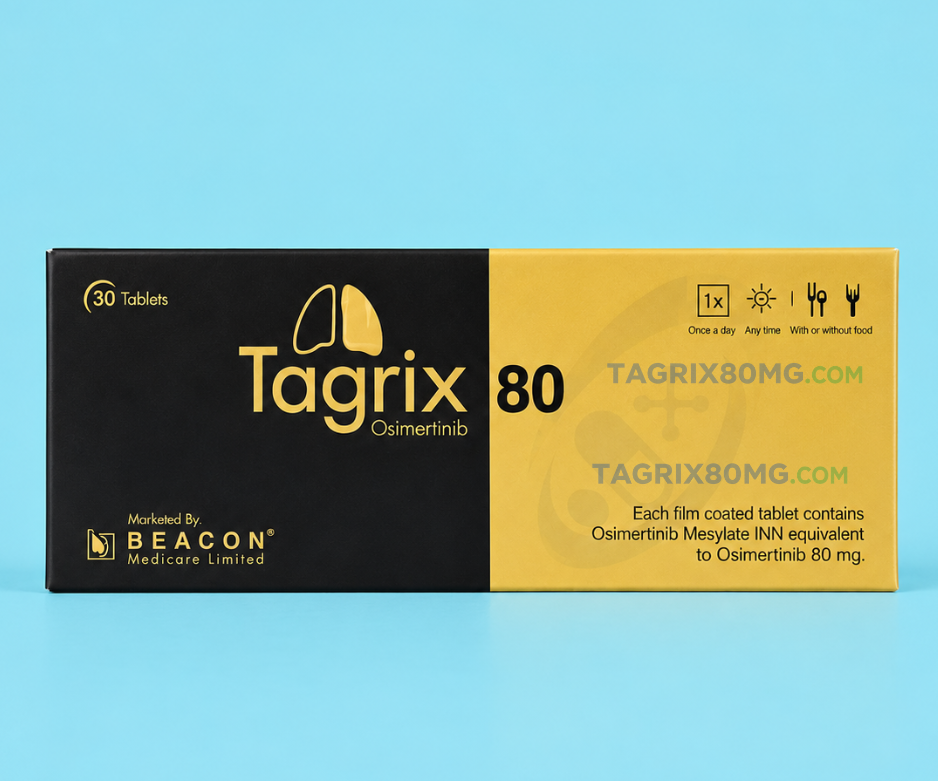
Tagrix 80 mg is a pharmaceutical product containing osimertinib, an oral targeted anticancer medicine used in selected patients with epidermal growth factor receptor (EGFR)-mutated non-small cell lung cancer (NSCLC).
The specific Tagrix product identified for this website is Tagrix 80 mg, manufactured by Beacon Pharmaceuticals Limited, Bangladesh. Beacon’s product information identifies Tagrix as an osimertinib tablet available in 80 mg strength, with a 3 × 10-tablet Alu-Alu pack presentation.
Tagrix should be distinguished from TAGRISSO, the reference/originator product associated with AstraZeneca. Both products contain osimertinib, but Tagrix and TAGRISSO are separate branded pharmaceutical products. Their manufacturers, formulations, excipients, packaging, regulatory authorizations and commercial supply arrangements should not automatically be assumed to be identical.
The U.S. FDA initially approved TAGRISSO in 2015. Subsequent regulatory approvals expanded the use of osimertinib into additional EGFR-mutated NSCLC settings.
The Tagrix-specific product information above should be checked against the current product packaging and official manufacturer documentation before publication or commercial use.
Tagrix 80 mg (Osimertinib) is manufactured by Beacon Pharmaceuticals PLC, a Bangladesh-based pharmaceutical company known for its strong focus on oncology medicines. Beacon was established in 2006 and has developed a broad portfolio of generic medicines, including targeted cancer therapies.
Beacon operates dedicated oncology manufacturing facilities and states that its production systems are designed to meet international pharmaceutical quality and regulatory standards, including GMP requirements. Its oncology facilities manufacture conventional chemotherapy medicines as well as targeted therapies and immunotherapy products.
The manufacturer’s official product information identifies Tagrix 80 mg as an 80 mg tablet containing osimertinib. The product is listed as being manufactured by Beacon in Mymensingh, Bangladesh.
Beacon also reports that Tagrix was developed as a generic version of osimertinib and is part of its international oncology portfolio.
Manufacturer: Beacon Pharmaceuticals PLC
Country: Bangladesh
Product: Tagrix 80 mg
Active ingredient: Osimertinib
Dosage form: Tablet
Address: Beacon Pharmaceuticals PLC Business Centre 9/B/2, Toyenbee Circular Road, Motijheel, Dhaka-1223, Bangladesh
Osimertinib is a targeted anticancer medicine classified as an EGFR tyrosine kinase inhibitor (TKI).
EGFR is a protein involved in signaling pathways that regulate cell growth and survival. Certain mutations in the EGFR gene can cause abnormal signaling that contributes to the development and progression of NSCLC.
Osimertinib is designed to inhibit specific mutant forms of EGFR, including clinically important activating EGFR mutations and the T790M resistance mutation. It also has activity against EGFR in the central nervous system, which is relevant because lung cancer can spread to the brain.
Treatment selection generally requires appropriate molecular testing to establish whether a patient’s tumor contains an EGFR alteration for which osimertinib is indicated.
Tagrix 80 mg and TAGRISSO should not be treated as though they are the same commercial product.
A more accurate description is:
Tagrix and TAGRISSO are separate branded pharmaceutical products containing the same active ingredient, osimertinib.
TAGRISSO is the established reference/originator brand associated with AstraZeneca. AstraZeneca developed osimertinib and introduced TAGRISSO as its reference product.
Tagrix, in contrast, is a separate branded osimertinib product manufactured by Beacon Pharmaceuticals Limited.
The presence of the same active ingredient does not by itself establish that the two products have identical excipients, manufacturing processes, packaging, regulatory approvals, quality documentation or commercial distribution arrangements.
Osimertinib is used in selected patients with EGFR-mutated NSCLC. Approved uses vary according to regulatory jurisdiction and may change as authorities review new evidence.
Depending on the applicable regulatory authorization, osimertinib may be used for:
Adjuvant treatment after surgical removal of certain EGFR-mutated NSCLC.
First-line treatment of locally advanced or metastatic NSCLC with specified activating EGFR mutations.
Treatment of metastatic EGFR T790M mutation-positive NSCLC following progression during or after EGFR TKI treatment.
Treatment after definitive chemoradiation in selected patients with unresectable stage III NSCLC containing specified EGFR mutations.
In some treatment settings, combination therapy with platinum-based chemotherapy and pemetrexed.
The exact indication, treatment line and eligibility requirements should always be determined according to the current prescribing information applicable to the patient’s country.
Not every person with NSCLC is an appropriate candidate for osimertinib.
The medicine is specifically relevant to tumors with particular EGFR genetic alterations. Molecular testing of tumor tissue or another validated specimen may be used to identify eligible mutations.
Commonly discussed EGFR alterations include:
Exon 19 deletions
Exon 21 L858R substitutions
EGFR T790M resistance mutation
The appropriate test and mutation criteria depend on the indication and regulatory labeling.
Osimertinib works by inhibiting abnormal EGFR tyrosine kinase signaling.
Some NSCLC tumors depend on mutant EGFR signaling to maintain proliferation and survival. Osimertinib binds to specific mutant forms of EGFR and inhibits signaling from the receptor.
By interfering with these signals, osimertinib can reduce pathways that promote tumor-cell growth and survival.
The EGFR T790M mutation can contribute to resistance to earlier-generation EGFR tyrosine kinase inhibitors.
Osimertinib was specifically developed to inhibit mutant EGFR, including T790M, while having comparatively less activity against normal wild-type EGFR than some earlier EGFR inhibitors.
This pharmacologic profile helped establish osimertinib as an important treatment option for EGFR-mutated NSCLC.
The appropriate dose of osimertinib depends on the clinical indication, treatment setting, patient characteristics and applicable regulatory labeling.
For many approved adult NSCLC indications, the commonly labeled osimertinib regimen is:
80 mg orally once daily.
However, the prescribed dose should always be determined by the treating oncology team.
Tagrix should not be started, stopped or dose-adjusted independently.
When prescribed:
Take the medicine exactly as directed.
Take it at approximately the same time each day.
Osimertinib may generally be taken with or without food.
Swallow the tablet according to the instructions supplied with the product.
Do not take additional tablets to compensate for a missed dose unless specifically instructed.
Continue treatment only as directed by the treating healthcare professional.
If a dose is missed, patients should follow the instructions in the applicable product information or contact their healthcare professional or pharmacist.
A double dose should not be taken to compensate for a missed dose unless specifically directed by a healthcare professional.
Dose interruption or reduction may be necessary when clinically significant adverse reactions occur.
Treatment decisions can also be affected by:
Cardiac abnormalities
Interstitial lung disease or pneumonitis
Other serious adverse reactions
Concomitant medicines
Individual clinical circumstances
The appropriate dose modification depends on the adverse reaction and the applicable prescribing information.
Osimertinib can cause adverse reactions ranging from mild effects to potentially serious complications.
Frequently reported adverse reactions can include:
Diarrhea
Rash
Dry skin
Nail-related changes
Stomatitis
Decreased appetite
Muscle or joint pain
Fatigue
Cough
Pruritus
Laboratory abnormalities
The frequency and severity of adverse reactions can vary between clinical studies and patient populations.
Important risks associated with osimertinib include:
| Safety concern | Description |
|---|---|
| Interstitial lung disease/pneumonitis | Inflammation or injury of lung tissue can occur and may be serious |
| QTc prolongation | Can increase the risk of potentially abnormal heart rhythms |
| Cardiomyopathy | Reduced cardiac function can occur |
| Keratitis | Inflammation involving the cornea may occur |
| Severe cutaneous reactions | Serious skin reactions are possible |
| Aplastic anemia | A rare but potentially serious blood disorder |
| Embryo-fetal toxicity | Osimertinib may cause fetal harm |
| Other adverse reactions | Additional clinically significant effects may occur |
Patients should promptly report new or worsening symptoms to their healthcare team.
Osimertinib can cause interstitial lung disease (ILD) or pneumonitis, which can be potentially life-threatening.
Symptoms that may require urgent assessment include:
New or worsening cough
Shortness of breath
Difficulty breathing
Fever
Unexplained respiratory deterioration
Patients experiencing significant respiratory symptoms should seek prompt medical evaluation.
Osimertinib can affect cardiac electrical activity and cardiac function.
Important concerns include:
QTc interval prolongation
Reduced left ventricular ejection fraction
Cardiomyopathy
Healthcare professionals may assess cardiac function and consider electrocardiographic or other monitoring when clinically appropriate.
Osimertinib can cause ocular adverse reactions, including keratitis.
Patients who develop significant eye pain, redness, light sensitivity, visual changes or other concerning eye symptoms should contact their healthcare professional.
Osimertinib can cause embryo-fetal harm.
People who are pregnant, planning pregnancy or capable of becoming pregnant should discuss the risks with their healthcare professional before treatment.
Appropriate contraception and pregnancy precautions should be based on the current prescribing information and individual clinical circumstances.
Breastfeeding recommendations should be checked against the current official prescribing information.
Because osimertinib may pose risks to a breastfed infant, patients should discuss breastfeeding with their oncology team before and during treatment.
Osimertinib can interact with other medicines.
Patients should tell their healthcare professional about:
Prescription medicines
Nonprescription medicines
Vitamins
Herbal products
Supplements
Other anticancer medicines
Particular attention may be required for medicines that affect CYP3A enzymes or drugs that can themselves prolong the QT interval.
Patients should not begin or discontinue another medicine without discussing it with their healthcare professional when clinically relevant.
Monitoring depends on the patient’s clinical situation and treatment indication.
Healthcare professionals may monitor:
Respiratory symptoms
Cardiac function
Electrocardiograms when appropriate
Electrolytes
Blood counts
Liver function
Other clinically relevant laboratory parameters
Symptoms suggesting serious adverse reactions
The extent and frequency of monitoring should be determined by the treating team.
Osimertinib has been studied extensively in EGFR-mutated NSCLC.
Clinical research has demonstrated its role in several treatment settings, including:
First-line treatment of advanced EGFR-mutated NSCLC
Treatment of EGFR T790M-positive disease after prior EGFR TKI therapy
Adjuvant treatment following surgical resection
Treatment after chemoradiation in selected unresectable stage III disease
Combination treatment with chemotherapy in selected advanced disease settings
Clinical-trial outcomes should not be interpreted as a guarantee of individual treatment response.
Treatment outcomes depend on factors including:
EGFR mutation type
Disease stage
Previous treatment
Tumor characteristics
Overall health
Presence of brain metastases
Treatment tolerance
Other individual clinical factors
Osimertinib is an orally administered, irreversible EGFR tyrosine kinase inhibitor.
It forms a covalent interaction with specific EGFR residues, resulting in inhibition of mutant EGFR signaling.
Its activity against clinically relevant EGFR mutations distinguishes it from conventional cytotoxic chemotherapy.
Although osimertinib can produce substantial clinical benefit in appropriate patients, resistance can eventually develop.
Resistance mechanisms are heterogeneous and may involve:
Additional EGFR alterations
MET amplification
Histologic transformation
Other genomic changes
Bypass signaling pathways
When disease progresses, the oncology team may consider additional molecular testing or other investigations to understand the mechanism of resistance and guide subsequent treatment.
Scan the QR code printed on the product box. The QR code will take you to the official drug product verification page, where you can complete the verification process.
The QR code will direct you to the Beacon Pharmaceuticals Ltd. e-verification page, where you can complete the product verification process.
After completing the verification, check the result carefully to confirm whether the product is genuine.
If the verification indicates that the product is fake or unauthorized, do not use it. Report the suspected counterfeit product and take appropriate legal action against the supplier through the Directorate General of Drug Administration (DGDA), World.
Always purchase medicines from licensed pharmacies or authorized suppliers and verify the product before use.
Osimertinib was developed by AstraZeneca.
The reference/originator brand is TAGRISSO.
AstraZeneca’s development of osimertinib led to its regulatory approval as a targeted treatment for selected patients with EGFR-mutated NSCLC.
These terms describe different aspects of pharmaceutical products.
The originator or developer is the company that discovered and developed the medicine or reference product.
For osimertinib, AstraZeneca is associated with the development and reference brand TAGRISSO.
TAGRISSO is the established reference product for osimertinib in major regulatory markets.
The manufacturer is the company responsible for manufacturing a specific marketed product.
For the Tagrix product identified on this website, the manufacturer is Beacon Pharmaceuticals Limited.
The marketing authorization holder is the legal entity responsible for a medicinal product authorization in a particular jurisdiction. It may differ from the physical manufacturer.
A distributor may be responsible for moving an authorized product through the commercial supply chain.
These roles should not automatically be treated as the same company.
| Feature | Tagrix 80 mg | TAGRISSO |
|---|---|---|
| Active ingredient | Osimertinib | Osimertinib |
| Strength discussed | 80 mg | 80 mg available |
| Drug class | EGFR TKI | EGFR TKI |
| Product type | Separate branded product | Reference/originator brand |
| Associated company | Beacon Pharmaceuticals Limited | AstraZeneca |
| Manufacturer | Beacon Pharmaceuticals Limited, according to the product information used for this website | Product-specific manufacturing arrangements are determined by official labeling |
| Regulatory status | Depends on jurisdiction | Established regulatory approvals in multiple jurisdictions |
| Packaging | Product-specific | Product-specific |
The two products contain the same active pharmaceutical ingredient but should not be described as identical commercial products without supporting documentation.
Tagrix 80 mg is a prescription anticancer medicine. The information on this website is intended for general educational and pharmaceutical-information purposes.
It does not replace:
A physician’s assessment
An oncologist’s treatment plan
A pharmacist’s advice
Official prescribing information
Country-specific regulatory documentation
Individualized medical advice
Patients should not start, stop, increase or decrease osimertinib treatment based solely on website information.
Regulatory approvals, indications, safety information and product-specific details can change over time and may differ between countries.
The Tagrix-specific manufacturer and product information should be checked against current official documentation and the actual product packaging before publication or reliance.
For treatment decisions, the current prescribing information applicable to the patient’s jurisdiction and advice from a qualified healthcare professional should take priority.
Osimertinib was developed by AstraZeneca.
The reference/originator brand is TAGRISSO.
AstraZeneca’s development of osimertinib led to its regulatory approval as a targeted treatment for selected patients with EGFR-mutated NSCLC.
Scan the QR code printed on the product box. The QR code will take you to the official Beacon product verification page, where you can complete the verification process.
After completing the verification, check the result carefully to confirm whether the product is genuine.
If the verification indicates that the product is fake or unauthorized, do not use it. Report the suspected counterfeit product and take appropriate legal action against the supplier through the Directorate General of Drug Administration (DGDA), World.
Always purchase medicines from licensed pharmacies or authorized suppliers and verify the product before use.
These terms describe different aspects of pharmaceutical products.
The originator or developer is the company that discovered and developed the medicine or reference product.
For osimertinib, AstraZeneca is associated with the development and reference brand TAGRISSO.
TAGRISSO is the established reference product for osimertinib in major regulatory markets.
The manufacturer is the company responsible for manufacturing a specific marketed product.
For the Tagrix product identified on this website, the manufacturer is Beacon Pharmaceuticals Limited.
The marketing authorization holder is the legal entity responsible for a medicinal product authorization in a particular jurisdiction. It may differ from the physical manufacturer.
A distributor may be responsible for moving an authorized product through the commercial supply chain.
These roles should not automatically be treated as the same company.
| Feature | Tagrix 80 mg | TAGRISSO |
|---|---|---|
| Active ingredient | Osimertinib | Osimertinib |
| Strength discussed | 80 mg | 80 mg available |
| Drug class | EGFR TKI | EGFR TKI |
| Product type | Separate branded product | Reference/originator brand |
| Associated company | Beacon Pharmaceuticals Limited | AstraZeneca |
| Manufacturer | Beacon Pharmaceuticals Limited, according to the product information used for this website | Product-specific manufacturing arrangements are determined by official labeling |
| Regulatory status | Depends on jurisdiction | Established regulatory approvals in multiple jurisdictions |
| Packaging | Product-specific | Product-specific |
The two products contain the same active pharmaceutical ingredient but should not be described as identical commercial products without supporting documentation.
Tagrix 80 mg is a prescription anticancer medicine. The information on this website is intended for general educational and pharmaceutical-information purposes.
It does not replace:
A physician’s assessment
An oncologist’s treatment plan
A pharmacist’s advice
Official prescribing information
Country-specific regulatory documentation
Individualized medical advice
Patients should not start, stop, increase or decrease osimertinib treatment based solely on website information.
Regulatory approvals, indications, safety information and product-specific details can change over time and may differ between countries.
The Tagrix-specific manufacturer and product information should be checked against current official documentation and the actual product packaging before publication or reliance.
For treatment decisions, the current prescribing information applicable to the patient’s jurisdiction and advice from a qualified healthcare professional should take priority.
Tagrix 80 mg contains osimertinib as its active ingredient. Beacon Pharmaceuticals identifies Tagrix 80 as containing osimertinib mesylate equivalent to 80 mg of osimertinib.
Yes. Tagrix contains osimertinib, which is an epidermal growth factor receptor (EGFR) tyrosine kinase inhibitor. It is designed to inhibit selected mutant forms of EGFR involved in certain types of NSCLC.
EGFR mutation testing helps identify whether a tumor has an alteration for which osimertinib may be an appropriate targeted treatment. The specific testing requirements depend on the indication and applicable regulatory guidance.
Osimertinib may be used in certain previously treated patients, including specific settings involving the EGFR T790M mutation. Whether it is appropriate after another EGFR inhibitor depends on the patient's mutation status, treatment history and applicable prescribing information.
Osimertinib preferentially targets certain mutant forms of EGFR, including sensitizing EGFR mutations and T790M in the applicable treatment setting. Its activity is related to the specific molecular characteristics of the tumor.
Osimertinib may be continued as long as the treatment remains appropriate and is tolerated, depending on the specific indication and prescribing information. Treatment duration should be determined by the treating oncology team.
Yes. Diarrhea is a commonly reported adverse reaction with osimertinib. Persistent or severe diarrhea can lead to dehydration and should be discussed with a healthcare professional.
Yes. Osimertinib can cause QTc interval prolongation, which may increase the risk of certain abnormal heart rhythms. Healthcare professionals may consider cardiac monitoring in patients with relevant risk factors.
Yes. Eye-related adverse reactions, including keratitis, have been reported with osimertinib. New eye pain, redness, light sensitivity or changes in vision should be discussed promptly with a healthcare professional.
Report new, persistent or worsening symptoms to your healthcare professional. Symptoms such as breathing difficulty, chest symptoms, significant skin reactions, vision changes or other potentially serious problems may require prompt medical assessment.